From Boardroom Representation to Workplace Leadership: Evaluating the Effects of California’s Gender Quota Legislation on Female Career Advancement
Published in Working paper, 2025
Overview
This paper examines whether California’s board gender quota (SB 826) improved women’s career advancement beyond the boardroom. Using the SB 826 as a natural experiment, the study evaluates how increased female board representation affected: female executives, and female employees in the broader workforce.
The analysis reveals a divergent pattern: the policy generated a short-term decline in female executives, but a meaningful increase in women in the broader workforce. These results highlight distinct mechanisms operating at different organizational levels.
Research Design
- Setting: Publicly traded firms headquartered in California vs. other U.S. states
- Data:
- Female board & executive composition from Bloomberg (2016–2022)
- Female employee composition from LinkedIn profiles (Revelio dataset; matched using Jaro-Winkler name matching)
- Empirical strategy:
- Event-study design comparing CA vs. non-CA firms
- Two-stage least squares (2SLS) using SB 826 as an instrument for the share of women on boards
Key Findings
1. SB 826 sharply increased female board representation
Compliance was substantial: firms added women to meet the “one-woman” and later “two- or three-woman” requirements. Many firms with no prior female directors added at least one woman immediately after the mandate.
2. Female executives declined in the short term
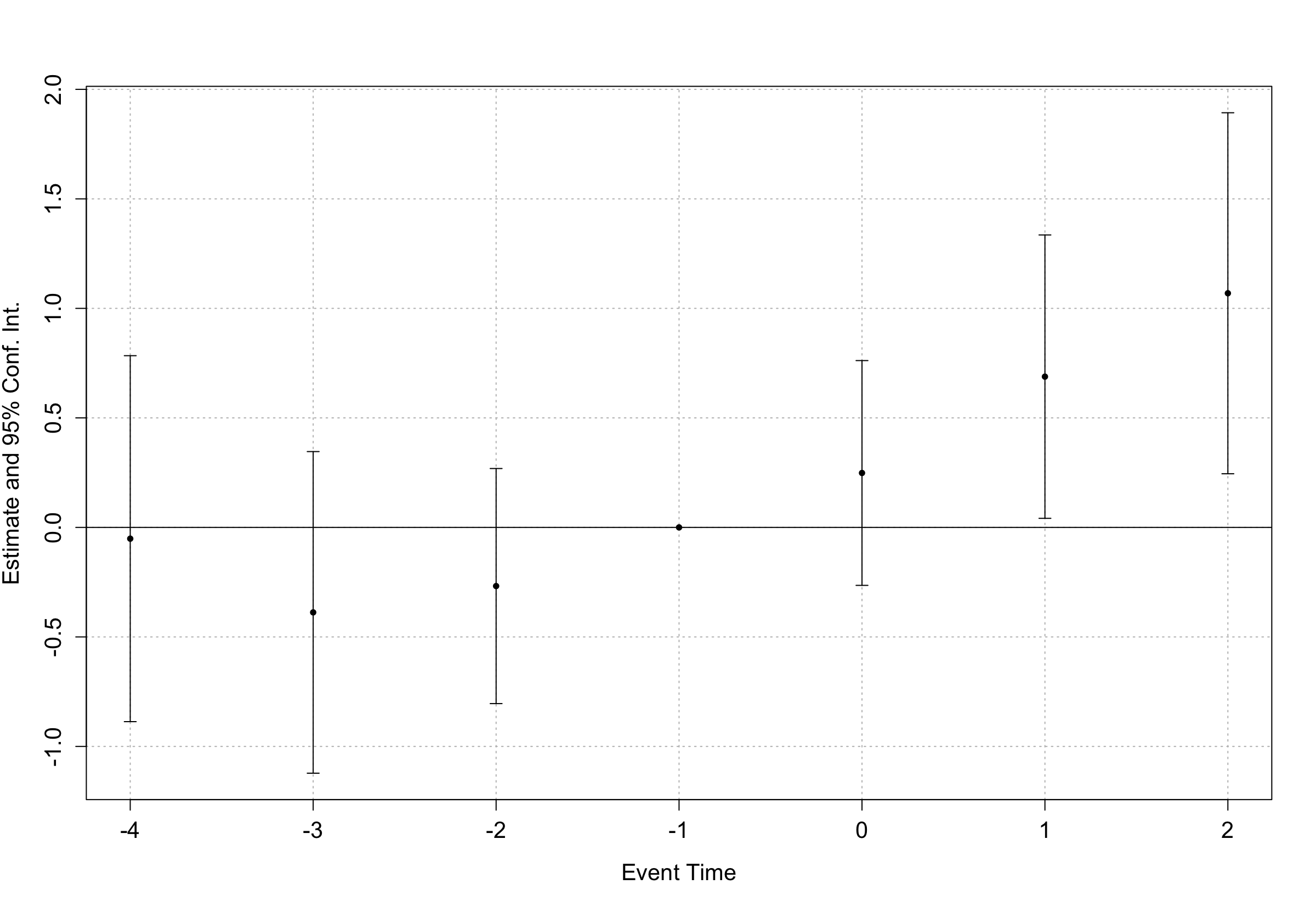
Event-study and IV estimates show a modest decline in female executives after implementation, concentrated in firms with low pre-policy diversity.
Mechanism:
Evidence shows a surge in first-time female board members after 2018 and strong IV results linking board increases to first-time appointments. This suggests strategic reallocation that firms promoted their senior female executives to board seats to comply, temporarily reducing the executive pool.
3. Female employees increased in the broader workforce
In contrast, the share of female employees increase significantly following the policy. IV estimates indicate that greater female board representation produced a positive and statistically significant “trickle-down effect” on workforce gender composition.
Results
Figure 1. Effect on Female Executives
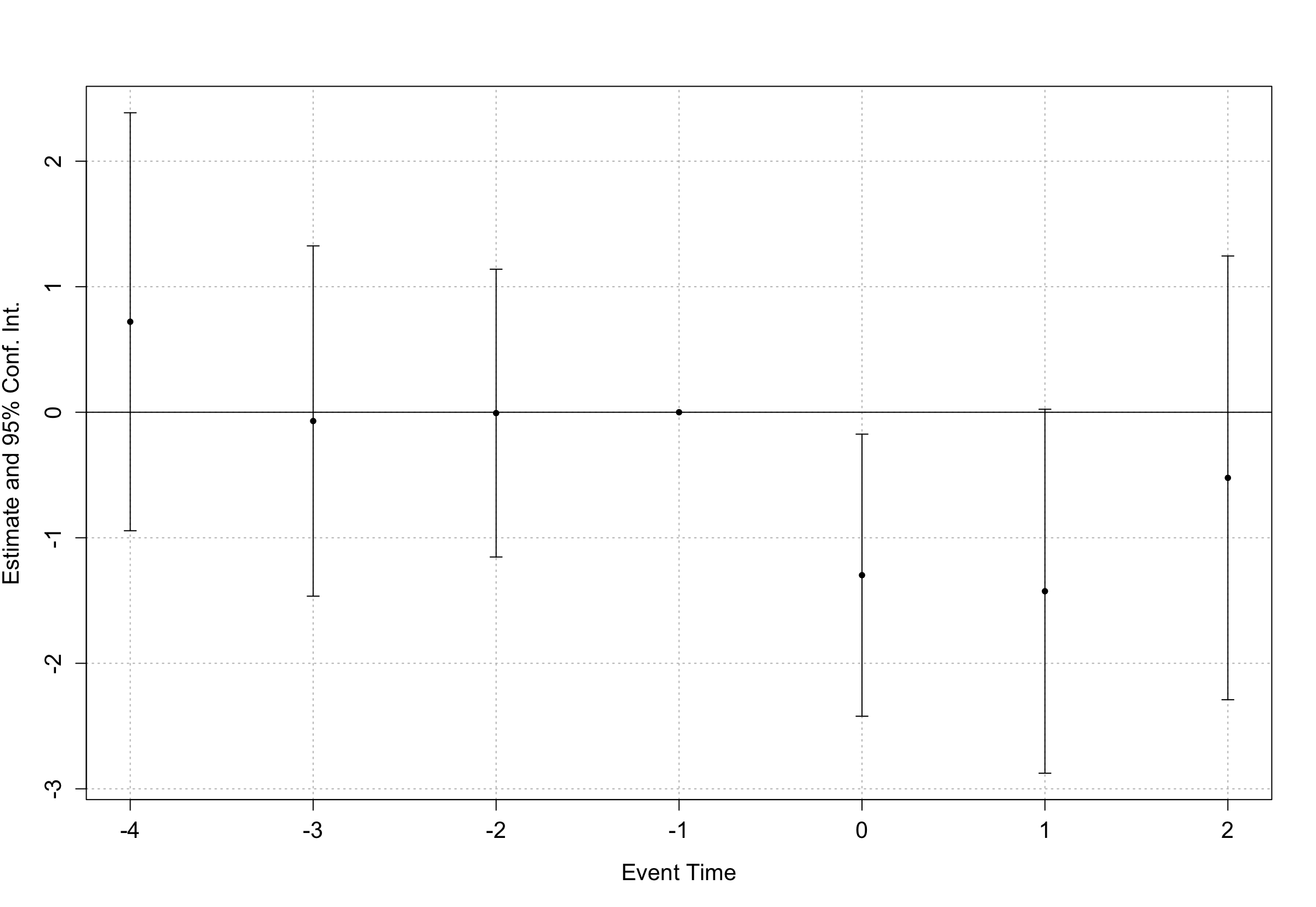
Figure 2. Effect on Female Employees